Tuesday, 15 August 2017

Twice-a-Year Dental Check-ups

Summer is ticking down to a close, and school is suddenly upon us. While homework might not yet be on kids’ minds, there are some tasks they should check off at the start of every new school year. In fact, the task we’re focused on—you children’s routine dental checks—are typically done at the start of each semester.  


Regular dental check-ups might be a “to-do,” but they don’t have to be seen like “homework,” either. Healthy teeth (and a healthy attitude toward dental hygiene) make for happier, more comfortable, and higher-performing kids during the school year. 

 The origin and purpose of twice-a-years

Prevention is the best teacher of oral health. So, let’s learn what your school-aged kids gain with twice-a-year dentist check-ups. 


  1. Detecting decay and changing habits before cavities start

    Let’s get real: there’s a possibility your children rush off to school some mornings without brushing their teeth. Even if your son or your daughter is highly disciplined in their brushing routine, those sneaky bacteria will find a way to harm teeth, particularly with school-time snacks. If bacteria were a student, he or she would be that student who always cheats on exams. Biannual dentist visits are crucial to catch bacteria before it leads to a loss of tooth integrity.

  2. Spotting cavities or damaged fillings

    Treating cavities as soon as they’re found means saving time on school absences, and discomfort during classes. Your child won’t be subject to distracting or unmanageable discomfort with the regular dental check-ups to address problems before they become disruptive.

    And did you know that cavities can spread? If one tooth develops severe decay, it can affect other teeth, and cause soft tissue or nerve damage. This can lead to horrendous discomfort and far more absences from school. This shouldn’t be a reality for any growing student.

  3. Healthy oral habits moving forward in life

    Not only do regular dental appointments for your kids reinforce the care routine to keep their teeth healthy as adults, but these regular, twice-per-year reminders can keep the daily dental routine front-of-mind even while they’re young. Dental visits also make your children accountable to a professional outside of the home—it’s not just about what Mom or Dad says, it’s about what the dentist expects of your kids, too.

  4. Oral health as an indicator overall health

    Dental professionals emphasize how regular dentist check-ups are just as important as your children’s general physical exams. By inspecting kids’ teeth, dentists sometimes connect dental issues with other underlying issues, for example with signs of digestive issues or dehydration.

  5. Leaving kids with squeaky clean teeth


    Don’t forget that these dental checks are also your child’s chance to get teeth cleaned professionally. Starting off each semester with brilliant, shiny whites without any tartar or plaque build-up will make those school year smiles all that much more dazzling.

    Give your children the opportunity to start school with a fresh smile, and with the positive dental habits to teach how important—and rewarding—good oral hygiene can be! 

The post Twice-a-Year Dental Check-ups appeared first on Fort Worth Dentist | 7th Street District | H. Peter Ku, D.D.S. PA.

Monday, 7 August 2017

How Changes in School Lunch Diet Can Affect Your Kids’ Oral Health

During summer vacation, you probably eat most of your meals together with your kids. Sharing breakfast, lunch and dinner makes it easy for you to monitor what they eat, and allows you to make sure that their nutrition is healthy and wholesome. You not only control what they eat but when they eat it, which is another relevant parameter of your kids’ health. 


When the school year starts, you struggle to maintain your children’s diet habits, as apples, pears and carrots are replaced by hard candy, potato chips and high-fructose drinks. School cafeterias have made every effort to offer healthy lunches, but are still the breeding ground of pizza, burgers, chocolate milk and lunch-bag swaps between children. When your kids are on lunch break, and their friends offer sugar-saturated bubble gums or treats, you lose the control over their oral health that you had in the summer. After-school and weekend visits to friends’ houses further remove you from that position of control over what your children eat. 

 School lunch and school smiles

Breakfast, the most important class of the day 


Picture the scene: the morning rush of everyone getting ready in your home. The kids sleep over the alarm, skip brushing their teeth, then eat a bowl of sugary cereal before running to class. Is the scramble of the morning grind affecting your kids’ teeth? Here are a few tips to start oral health off right from the start: 


  1. Replace sugary cereals with eggs. Sugar is already a threat when your kids are at school, so no need to start the day off with it. Eggs are full of vitamin D, which is good for your child’s bones and teeth. If you don’t even have time to scramble an egg in the morning, hard boil a few of them the night before.
  2. Avoid extra-sugary oatmeal, artificially sweetened jams or peanut butter. Focus on dairy products for breakfast with your kids, including fresh milk, cheese or yogurt. Consuming dairy products in the morning can make your kids’ teeth resistant to bacteria throughout the day at school. Yogurt is bursting with phosphates, and cheese increases pH levels and keeps a lower level of acidity in your child’s mouth.
  3. Leave some fresh apples, bananas or baby carrots on the table for your children to grab on their way to school. Apples and pears increase saliva production, the mouth’s natural mouthwash. Bananas are great for teeth whitening, while carrots have a natural “brushing” effect that help serve as cavity-protection for your teeth. 


Tooth-healthy sack lunches 
The biggest shift in diet for your children during the school year is lunch. Even if you pack your kids lunches, these will probably differ from what they were eating at home. You can have a huge impact on how much this change affects your kids’ oral health over the school year.  


Talk to your children openly about tooth health, including the negative effects of gummy candy, soda drinks and sugary bubble gum. That said, knowing that it will be next to impossible for most children to resist when presented with these treats, pack their school lunches accordingly. Some tooth-healthy sack lunches include: 


  • Sandwiches with low-fat cheese: the calcium and vitamin D will be good for your kids’ teeth, and choosing low-fat helps avoid excess calories as a trade-off for the calcium 
  • Crunchy vegetables (carrots, cauliflower, celery): these act as natural tooth-brushing snacks 
  • String cheese: a class-time favorite, you can be sure this low-calorie, high-calcium treat will be eaten 
  • Almonds: all nuts are high in calcium and protein without being high in sugar, and almonds are a crunchy favorite that come in a variety of tasty variations 
  • Whatever sandwich you make, make it with whole grain bread: whole grains help fight gum disease—and these breads are lower in sugar 


The biggest challenge might be packing the tooth-healthy lunch that will definitely be eaten. Keep an open dialogue with your children about healthy teeth, and model the same behaviors at home that you want to see them develop. Especially during the school year, what impressions your kids have of good and bad habits, right and wrong will be compared between what they see at home and at school. 

The post How Changes in School Lunch Diet Can Affect Your Kids’ Oral Health appeared first on Fort Worth Dentist | 7th Street District | H. Peter Ku, D.D.S. PA.

Tuesday, 1 August 2017

Dental Crowns and Dental Prosthetics

There are countless reasons why you might consider a dental crown or prosthetic tooth replacement. Dental crowns are usually inserted to cover a drilled-off part of your tooth, and can even be linked together to create what’s called a dental bridge. Prosthetics are full, false teeth, usually anchored by a dental implant. 


If you’ve heard these terms and wondered how they’re different, and what really constitutes as one or the other, you’ve come to the right place. We’ve outlined the basics on dental crowns and dental prosthetics here for you to learn about. 

 Dental crown or prosthetic?

Dental crowns 
A dental crown is a fixed prosthetic addition to your tooth that usually covers a drilled-off part. When only one of your teeth is involved, then you’re dealing with a single crown. Linking several crowns together represents a dental bridge. 
It’s not only when part of a tooth is missing that patients think about a dental crown. Tooth discoloration or rotation are also common reasons why people have crowns placed. When crowns are put in, your dentist has techniques to ensure that your bite is unaffected. The process is typically regarded as simple and non-invasive. 


Materials used in dental crowns 
The chosen material for your dental crown will be a type of ceramic, as these materials are long-lasting, attractive, and good for chewing. Ceramics are tolerant to temperature changes and resistant to chemical influences and corrosion, and are also biocompatible, which means you’ll be safe from allergic reactions. Plus, ceramics simulate the appearance of natural tooth, so no one has to notice a difference in your smile.  


These are some of the common ceramics used in dental crowns: 


  1. Metal ceramics

    These crowns are considered a standard in dentistry, and are also the most affordable solution.
  2. Zircon ceramics

    Zircon-oxide ceramics are characterized by extreme durability. The Zirkon base underneath the ceramic coating allows for the reflection of natural light, which keeps the shine in your smile. And while metal ceramics show their silver color along where the crown meets your gums, zircon ceramics are completely white.
  3. 100% ceramics crown

    Full ceramic crowns have the ability to simulate the look of your natural tooth better than any other for its color, translucence and opalescence. They typically represent the most expensive option. It’s just a matter of consulting with your dentist to choose the option that’s best for you.


Prosthetics and dental implants 
The use of multiple prosthetics requires a supportive device rooted into your jaw, which is where dental implants come in. This route is more secure and offers greater stability than a crown ever could. However, if you have any remaining tooth left at the site of the prosthetic, it must be removed in order to place the dental implant. 


The placement of dental implants is a more involved process, however if you’re able to consider the surgery, the use of these full-tooth prosthetics is widely considered the best option for tooth replacement. Crowns are quick and non-invasive, but prosthetics anchored by dental implants imitate tooth better in look and function. 
Whether you’re considering a dental crown or dental prosthetics, it starts with a consultation with your dentist. We’re fortunate to live in an age where each option enjoys huge success rates, and dentists have more refined tools than ever to make these tooth replacements happen and keep your smile in-tact. 


Now that you know the basics, the next step is a simple conversation with your dentist! 

The post Dental Crowns and Dental Prosthetics appeared first on Fort Worth Dentist | 7th Street District | H. Peter Ku, D.D.S. PA.

Tuesday, 25 July 2017

Electric Toothbrush VS Manual Toothbrush

Over the era of man, we’ve had a lot of ideas for oral upkeep. From consuming certain plants to scrub molars, to using seashells as dental implants, it’s no surprise we have such a variety of toothbrushes after millennia of tooth brushing. But with all the technologies available to us today, we’re left with a new-age dilemma: should we be using an electric or manual toothbrush?


Though the basic design of the toothbrush hasn’t changed much over the past century (using a handle with clustered bristles), the invention of the electric toothbrush back in 1950s represented a huge milestone in our capacities and technologies. Originally, the purpose of the electric brush was to assist people with disabilities to keep up with their oral hygiene without help. But over the last 20 years, these instruments have become a staple in every supermarket. There’s been a real debate in our lifetime about the electric versus traditional toothbrush.


Of course, the manual and electric toothbrushes each have their advantages and disadvantages. We’ll lay out all the objective data for you, but your preference will almost always be the deciding factor.

Electric vs manual toothbrush

Advantages of a manual toothbrush:


  • Proven by generations of use to be efficient.
  • Manual toothbrushes are cheaper, which also enables users to invest more of their dental budget in sensitivity-specific toothpastes or tooth whitening packs, or other dental products.
  • Most manual toothbrushes have added features like tongue scrapers and gum massagers. The tongue scraper comes in handy, as only a tiny portion of the population invests in an individual tongue scraper.
  • More portable in size and doesn’t risk losing charge or needing batteries.


Disadvantages of a manual toothbrush:


  • Contrary to the electric toothbrush, manuals don’t have an installed timer—so, it’s easier to do a quick brush that ultimately won’t be sufficient.
  • Without the electric action motion, the brushing is all up to you. You probably won’t move as fast as an electric brush can, and can also get tired if you try to brush more aggressively.


Advantages of an electric toothbrush


  • Bigger handles—some people like having a more substantial handle to hold onto.
  • The installed timer in many models is beneficial for those who are prone to quick or lazy brushing.
  • For most of us, the massaging vibration motion is pleasant across the teeth and gums.
  • Smaller brush heads mean electric brushes can be better for getting hard-to-reach places.
  • Helpful for people suffering from arthritis or joint pain.


Disadvantages of an electric toothbrush:


  • Electric toothbrushes can be very expensive, not to mention purchasing brush heads or replacement chargers and batteries.
  • The science is indecisive whether these brushes are actually better, and therefore worth the investment.
  • Electric brushes require charging or battery replacement, and you risk being left without the brush working on a trip.
  • Electric toothbrushes are overall less portable than manual ones.


When it comes down to it, the best toothbrush is the one that you’re really going to use. Keep in mind that you should be buying a new toothbrush every three-to-four months, which gives you plenty of opportunity to try different options. Keep on trying different bristle patterns or styles until you find the toothbrush you like best.

The post Electric Toothbrush VS Manual Toothbrush appeared first on Fort Worth Dentist | 7th Street District | H. Peter Ku, D.D.S. PA.

Tuesday, 18 July 2017

Teeth and Summer Sports

As much as summer sports are excellent for your physical and mental health, injuries do happen. It’s all fun and games until someone gets hurt. If you didn’t break your arm while playing outdoors as a kid, surely you know someone who did.

But, what are the most common injuries to the face? If you said black eyes, try again—tooth trauma (including losing teeth) is actually the most common summer injury above the neck. Other common injuries include cuts to the lip and bloody noses.
Summer sports and your teeth
Is there such a thing as a risk-free sport?

Unsurprisingly, some sports come with a higher risk of teeth injuries. Among the most hazardous summer sports for teeth are tennis, soccer, beach volleyball, outdoor basketball and football—in other words, the sports with flying balls. Just one simple mishap can lead to losing a tooth or breaking your jaw.


No matter how fun it is to get lost in the game, know what to do in the case of injury. Most accidents won’t be your fault, and so playing carefully isn’t enough. The only real way to avoid injuries to your teeth this summer is to not play summer sports at all, which no dentist would ever want to recommend.
So, what should you do in case of injury?

Some people win matches, others lose teeth. In the case of trauma to your teeth, see your dentist as soon as possible—especially if a whole tooth has come out. Store any whole teeth in water or milk until you make it to the dentist so they can be safely (and successfully) placed back in their spots. Knocked-out teeth should be replaced within a couple of hours, and usually will take few weeks for to stabilize. On the other hand, if your tooth broke, your dentist will have to design dental cups or non-metal crowns.
Should I always wear mouth guards? Even in non-contact spots?

The Academy for Sports Dentistry was formed in 1983 with the aim to protect sport players and to promote communication between dentists, doctors and coaches. Along with their injury prevention goals, the Academy recommends the consistent use of mouth guards. You can find standard mouth guards over-the-counter, which should be just fine for most summer outdoor sports. However, if you are a professional or competitive player, consider a personally-designed mouth guard crafted by your dentist. As compared with the generic guards, a personalized guard fits your teeth perfectly and doesn’t move when you experience a fall or hit. This makes them not only more comfortable, but safer and more effective.

Non-contact sports like tennis are less risky than contact sports—but that doesn’t mean injuries don’t happen. Whenever there’s a chance to take a ball to the face, or fall to the ground, mouth guards are the simplest and smartest way to protect your teeth. Just remember—playing safely only goes so far, because accidents can always happen. Just have your plan in place, and do what you can to keep your teeth where they belong!

The post Teeth and Summer Sports appeared first on Fort Worth Dentist | 7th Street District | H. Peter Ku, D.D.S. PA.

Monday, 10 July 2017

Are Dental Implants the Best Solution for Tooth Replacement?

Whether you already lost your tooth or will have one removed soon, teeth should be replaced as soon as possible. The loss of even one tooth has more implications than the obvious aesthetic—it affects your overall oral health, too.


Immediately after your tooth is pulled out, the jawbone around the tooth begins to retract. This process, known as resorption, is most dramatic in the first three months. Additionally, your surrounding teeth will start moving toward the vacant space, creating tiny gaps between one another. The migration of teeth makes oral hygiene more difficult, and can change the shape of your face.


Causes of tooth loss


There are many reasons why you might lose a tooth. In most cases, it’s the result of an accident. You could lose a tooth in a traffic accident or in a sport activity, or any other time you take an accidental blow to the face.

Dental Implants

10 reasons why dental implants are the best solution


Research has consistently shown that dental implants are the best solution to replace the loss of a tooth. Here are nine reasons why:


  1. A dental implant functions as an equivalent substitute for your tooth, both in appearance and function. You will feel, speak and eat just as though you had a natural tooth.
  2. Longevity. With appropriate care, your implant can last forever, as compared with the dental bridge with an average lifespan of seven years.
  3. Dental implants prevent the loss of bone in your jaw (resorption). In comparison to dental prosthesis or a dental bridge, implants are the only solution that keeps the bone intact, and has even shown to encourage jawbone growth.
  4. Chewing is undisrupted with dental implants, as opposed to prosthesis. Your new dental implant is often even steadier than natural teeth.
  5. Dental implants are not susceptible to cavities. But remember, it’s still important maintain regular oral hygiene—it’s not just for your teeth, but for your gum health, too.
  6. You spare neighboring teeth from damage that happens during the construction of a dental bridge. Dental implants are also the most secure option to prevent other teeth around your mouth from shifting.
  7. Dental implants in their current form are the result of decades of research, and all the newest technologies. Titanium-based implants have only been around for 30 years—this is your state-of-the-art option for tooth replacement.
  8. You don’t need to add new products or tools to your oral hygiene. Brushing your teeth is the same as always.
  9. You’ll keep your smile and your self-confidence intact. And with dental implants, depending on the cause of tooth loss, many patients report how their confidence and quality of life even improved after their implant.
  10. In the long run, dental implants can be more cost-efficient than any alternative, because they don’t have to be replaced.


There are many other reasons why dental implants are the most beneficial, long-lasting and functional tooth replacement solution. And with advancing technology, there are now options to have implants placed with one surgical procedure instead of two. Each of these options starts with a consultation with your dentist.

The post Are Dental Implants the Best Solution for Tooth Replacement? appeared first on Fort Worth Dentist | 7th Street District | H. Peter Ku, D.D.S. PA.

Tuesday, 4 July 2017

IS ANESTHESIA BAD FOR YOUR WISDOM TEETH?

If you’re over eighteen years old, you’ve probably gone through the pain of wisdom teeth coming in or getting removed. Not everyone has wisdom teeth, but those who do typically have to get one or more removed.


Why not all four? Statistics show that nine out of ten people have at least one ungerminated wisdom tooth. In most cases, the ungerminated tooth causes pain or infection, which is why dental experts suggest surgical removal of problem wisdom teeth—or of all wisdom teeth before they become a problem.


Dentists, researchers and anthropologists alike have written about the evolution of our mouths, and how our shrinking jaws have led to wisdom teeth needing to be removed. But is that the only factor contributing to some patients’ ungerminated wisdom teeth? Could dental treatments in childhood have an effect on their growth?


When it’s time to have one or more wisdom teeth surgically removed, your dentist will give you anesthesia so that you don’t feel pain. You might have already been familiar with that numbness and tingling from having other dental work done. According to the National Institute of Dental and Craniofacial Research, 92% of adults have had tooth decay at some point in their lives. You can imagine that most of us have therefore experienced anesthesia in order to get this decay treated.


In recent years, study has shown that the use of anesthesia might be one additional factor in increasing numbers of ungerminated wisdom teeth.


Relationship between anesthesia and disrupted wisdom tooth growth


Researchers from the University of Tufts in Boston, MA have found a correlation between local anesthesia given to children between 2 and 4 years old, and the absence of wisdom teeth. The results of this study suggest that giving anesthetic injection to children may cause disruption in the regular development of wisdom teeth.


According to the author of this study, it gives extraordinary food for thought that such a routine measure can lead to developmental disorder in teeth growth. Never before has anesthesia been perceived as potentially harmful, as patients rarely report any side effects following the procedure.

New research about your wisdom teeth

Why would anesthesia affect wisdom teeth, and not other teeth?


Wisdom teeth are more sensitive to external influences because of the manner in which they grow. Contrary to other teeth, their development does not begin in utero, but much later after we’re born. Between years two and four, we begin to develop wisdom teeth deep in the jaw—years before eruption. And, of course, they don’t reach full growth until we are adolescents or young adults.


In the beginning of its development, a wisdom tooth is hypersensitive to injuries because it’s not covered with bone tissue. The wisdom tooth germ is covered only with a thin layer of mucous membrane. When the germ appears, it is as thin as the needle of anesthetic injection—and the soft tissue surrounding it is very close to where anesthetic injections are usually applied.


Implications of these findings


The research shows that individuals who were given anesthesia as children, ages two to four, have four times the likelihood of an ungerminated wisdom tooth than those who did not receive anesthesia. And while this information might be surprising, it’s always at least a generation after a long-standing medical practice has been administered that we fully understand its impact. In the case of local anesthesia, we’ve been using it in dental work for over 100 years.


The most interesting impact this research could have over time would be if it promotes anesthesia as a form of stopping wisdom teeth from growing, bypassing problems and removal altogether.

The post IS ANESTHESIA BAD FOR YOUR WISDOM TEETH? appeared first on Fort Worth Dentist | 7th Street District | H. Peter Ku, D.D.S. PA.
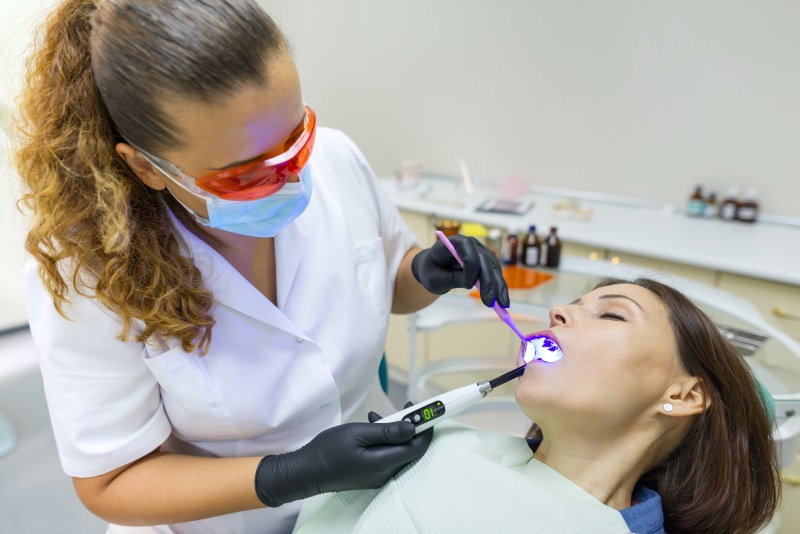
Sedation Dentistry – Your Ultimate Guide

There are a number of reasons that adults —grown adults—avoid trips to the dentist.     According to the American Dental Association, o...